

Between Science and Pleasure: Sensory Analysis vs The Society Panels
For an audio recorded version of this article, click here.
There is a paradox that dwells within each dram. On the one hand sensory analysis aims to strip away all emotion, bias, and subjective opinion. On the other hand, whisky is meaningless without memories, pleasure, and emotional connection. Grappling with these two approaches unlocks a cascade of dilemmas, in the middle of which, we find The Scotch Malt Whisky Society panels.
Join me as we peek behind the curtain of sensory analysis to understand why there’s a lot more to The SMWS panels than debating whether a whisky is golden yellow or light amber. By the end you will understand the neurological, psychophysical, and philosophical challenges that lie hidden within each bottling.
Hedonic Tasting: Whisky as Pleasure
Let’s start at one extreme end of the spectrum – hedonic tasting. This is nothing more than a fancy name for tasting whisky purely for pleasure. There are no rules, no restrictions, and definitely no lab coats. In fact, the only real consideration is: ‘how much do I enjoy this dram?’.
But tasting for pleasure is scientifically messy, subjective, and gloriously human. It embraces the fact that everyone experiences whisky differently and gives poetic license to anyone with a dram in their hand. Whether you are a peat freak or a sherry cask iconoclast, tasting whisky is emotional, nostalgic, and deeply personal.
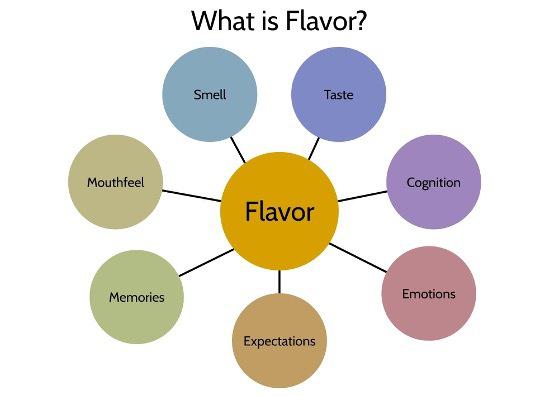
Hedonic tasting reminds us that flavor is more than notes on a page. It’s an internal experience so abstract that language can never fully capture it. But herein lies the conundrum: how can we objectively measure that which is innately subjective?
Sensory Analysis: Whisky as Numbers
At the other extreme we have sensory analysis. This is the industry’s attempt at making flavour measurable. It’s about objectivity, reproducibility, and control. The goal is not to decide whether a whisky is nice, but to describe and quantify its sensory attributes in a way that’s devoid of opinion and bias.
To do this, distilleries use trained panel teams. Every detail is controlled including the lighting, temperature, background odours, and the tasting protocols. Each sample must be assessed under precisely the same conditions, including reducing the alcohol levels down to a consistent abv.
Rather than panel members waxing lyrical about ‘farmyard notes’ or 'sponge cake’, they are trained to identify predetermined odors and flavors – which is where flavour wheels originate. They rate each attribute such as fruity, nutty, or floral, for intensity using a structured scale. Sensory analysis is whisky under the microscope. Sometimes it aims to replicate the consumer experience, but often the goal is to better understand the relationship between chemical composition and flavor.
The result? Clean data. Numbers that can be plotted and compared statistically to answer vital questions: Did that new yeast strain change the flavor profile? Has a replacement still altered the new make character? Does this batch match the house style?
The Society Panels: Whisky as Imperfect Science
The SMWS panels straddle these two worlds. On the one hand they must approach each sample with enough rigor to ensure consistency, structure, and control. On the other hand, however, they must embrace the idiosyncrasies and foibles of not just the samples, but also of the human perceptual experience.
Rather than serving the production teams, the role of The Society panels is to serve the members. As such, the panels must replicate how members enjoy the drams, using language that is descriptive, relatable, and entertaining. Hence, The Society bottle notes express ‘this is what we found at the time’, rather than dictating what each member should experience.
Whereas sensory analysis commonly reduces each sample to an identical abv, any Society member will understand the shortfalls of this approach. Some whiskies are better with water, some are not. Exploring what sensory changes occur with different quantities of water is equally important as the bottle notes themselves.
A Different Tool For a Different Job
Sensory analysis strives for quantitative data points and understanding chemical composition. Conversely, The Society panels aim to reflect whisky as it is experienced in the real world: unpredictable, social, emotional, and fun. Neither is right or wrong, just serving different outcomes.
Assessing whisky in a quantitative way tones down the variables of being human and transforms sensory information into numbers. It serves the purpose of creating clean data but in doing so must remove itself from the real-world flavor experience. But The Society's approach of embracing the subjectivity of the flavor experience brings its own problems.
How can we amalgamate the subjective sensory assessments from the panel team members into a refined, cohesive, and intelligible description? One that will articulate the abstract experience of a dram to a multicultural, global audience. It’s a challenge.
The Science of Peculiarities
To walk the middle line between science and hedonism requires viewing the neurological, psychophysical, and philosophical conundrums of flavor through a unique lens. The Society bottle notes balance the peculiarities of remarkable whiskies with the science of communicating them. After all, it’s often the imperfections that make great whisky – perfect.
So the next time you read a Society tasting note and wonder at its eccentricity, remember, it’s not just about describing what’s in the glass. It’s about capturing the spirit of the moment, the diversity of perception, and the joy of discovery. That’s where whisky really lives: not in a spreadsheet, but within abstract thoughts inside your head.
In our next lesson we’ll discover why flavor is an illusion. But if you can’t wait until then, visit The Sensory Advantage to learn more about how the molecules in your glass become perception in your head.